
What Is GST Registration? Meaning, Eligibility & Process
GST registration is an important tax requirement for many businesses in India. It gives a business an official identity under the Goods and Services Tax system and allows it to follow GST rules legally. However, not every shop owner, freelancer, service provider, or online seller must register. The requirement depends on annual turnover, business location, type of supply, and whether the business falls under compulsory registration rules. After registration, businesses can use a GST Number Search to verify their GSTIN and confirm their registration status.
This guide explains GST registration in simple words, including eligibility, documents, fees, benefits, and the online application process. It also explains how a GST Number Search can help verify GST details after registration.
What Is GST Registration?
GST registration is the process of registering a business or individual under India’s Goods and Services Tax system.
After approval, the applicant receives a unique GST Identification Number, known as a GSTIN, and a digital registration certificate.
A registered taxpayer can:
In simple terms, GST registration creates an official tax account for a business.
What Is a GSTIN?
GSTIN stands for Goods and Services Tax Identification Number. It is a unique 15-character number issued to every registered taxpayer.
The GSTIN is linked to the taxpayer’s PAN and state registration. It is commonly displayed on:
GST registration is generally state-specific. A business operating from taxable locations in different states may need a separate GSTIN for each state.
Who Needs GST Registration?
A person or business may need GST registration after crossing the applicable annual turnover limit.
The requirement depends on:
GST Registration Turnover Limit
The commonly applicable turnover limits are:
For Service Providers
For Businesses Selling Goods
These limits do not apply in every situation. Some businesses may need registration even when their turnover is below the normal limit.
What Is Aggregate Turnover?
Aggregate turnover means the total value of supplies made under the same PAN across India during a financial year.
It generally includes:
GST and compensation cess charged on invoices are not included in aggregate turnover.
Example
Suppose a person operates two businesses under the same PAN:
The aggregate turnover is ₹22 lakh.
The person cannot calculate each business separately because GST turnover is generally checked on a PAN-based, all-India basis.
When Is GST Registration Compulsory?
Certain people may need GST registration even when their turnover is below the normal threshold.
Casual taxable persons
Non-resident taxable persons
Certain interstate suppliers
Persons required to pay tax under reverse charge
Input Service Distributors
Persons required to deduct GST under TDS
Electronic commerce operators
Persons required to collect tax at source
Certain agents supplying goods or services for others
Some overseas online service providers
Special exemptions may apply to certain small businesses, online sellers, or service providers. The latest rules should always be checked before applying.
Who May Not Need GST Registration?
GST registration may not be required when:
Even when a person makes exempt supplies, their value may still be included while calculating aggregate turnover.
Can a Business Register Voluntarily?
Yes. A business can apply for voluntary GST registration even when it has not crossed the turnover limit.
Voluntary registration may help when:
Corporate clients prefer GST-registered vendors
The business wants to claim eligible input tax credit
Turnover is expected to increase soon
A marketplace requests a GSTIN
The owner wants a formal tax identity
The business plans to expand into other states
Once voluntarily registered, the business must follow GST rules, file returns, maintain records, and pay tax where applicable.
Benefits of GST Registration
GSTIN Format
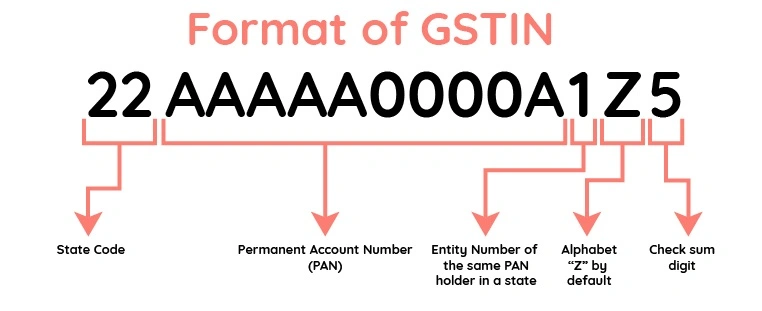
A GSTIN is a 15-character alphanumeric number used to identify a GST-registered taxpayer in India. During a GST Number Search, each part of this number has a fixed meaning, so understanding the format can help you spot typing errors, incorrect GST details, or mismatched supplier information before using it on invoices or GST return.
Legal Business Recognition
GST registration gives a business an official tax identity and allows it to operate as a registered taxpayer.
Input Tax Credit
Eligible taxpayers can claim credit for GST paid on qualifying business purchases.
For example, GST paid on stock, equipment, office supplies, or professional services may be adjusted against GST collected from customers, subject to legal conditions.
Better Business Credibility
A GSTIN may improve trust when dealing with:
Corporate buyers
Wholesalers
Distributors
Government departments
Large companies
Registered business clients
Easier Business Expansion
Registration can make interstate sales, vendor onboarding, and marketplace participation easier.
GST-Compliant Invoicing
A registered business can issue proper tax invoices showing GST rates, taxable value, and GSTIN details.
Documents Required for GST Registration
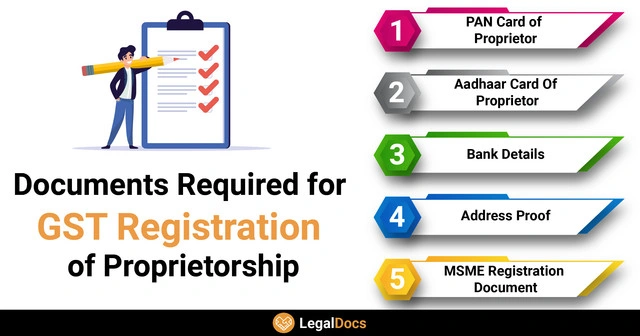
The required documents depend on the business structure.
Common documents include:
Address Proof
Depending on the property type, address proof may include:
Ensure the business name and address are written consistently across all documents.
How to Apply for GST Registration Online
GST registration can be completed through the official GST portal.
Open the GST Portal:
Visit the official GST website and select:
Services → Registration → New Registration
Complete Part A:
Enter basic information such as:
Taxpayer type
State
District
Legal business name
PAN
Email address
Mobile number
The email and mobile number are verified through OTPs.
Generate the TRN:
After verification, the portal provides a Temporary Reference Number, known as a TRN.
Use the TRN to reopen and complete the application.
Fill Out Part B :
Provide detailed information about:
Business structure
Promoters or partners
Directors
Authorised signatory
Principal place of business
Additional business locations
Goods and services supplied
Existing registrations
Upload Documents:
Upload clear and readable copies of all required documents.
Avoid:
Blurred images
Cropped pages
Expired documents
Incorrect addresses
Password-protected files
Complete Aadhaar Authentication:
Eligible applicants may need to complete Aadhaar authentication.
In some cases, the applicant may be asked to visit a GST Suvidha Kendra for biometric verification and document checking.
Verify and Submit the Application:
The form can be submitted using an approved verification method, such as:
Digital Signature Certificate
Electronic Verification Code
E-signature
Companies and LLPs generally use a Digital Signature Certificate.
Save the ARN:
After successful submission, the applicant receives an Application Reference Number, called an ARN.
The ARN can be used to track the application status.
Respond to Clarification:
The tax officer may request additional details or documents.
Read the notice carefully and respond within the time mentioned on the GST portal.
Download the GST Certificate:
After approval, log in to the GST portal and open:
Services → User Services → View or Download Certificates
The GST registration certificate can then be downloaded as a PDF.
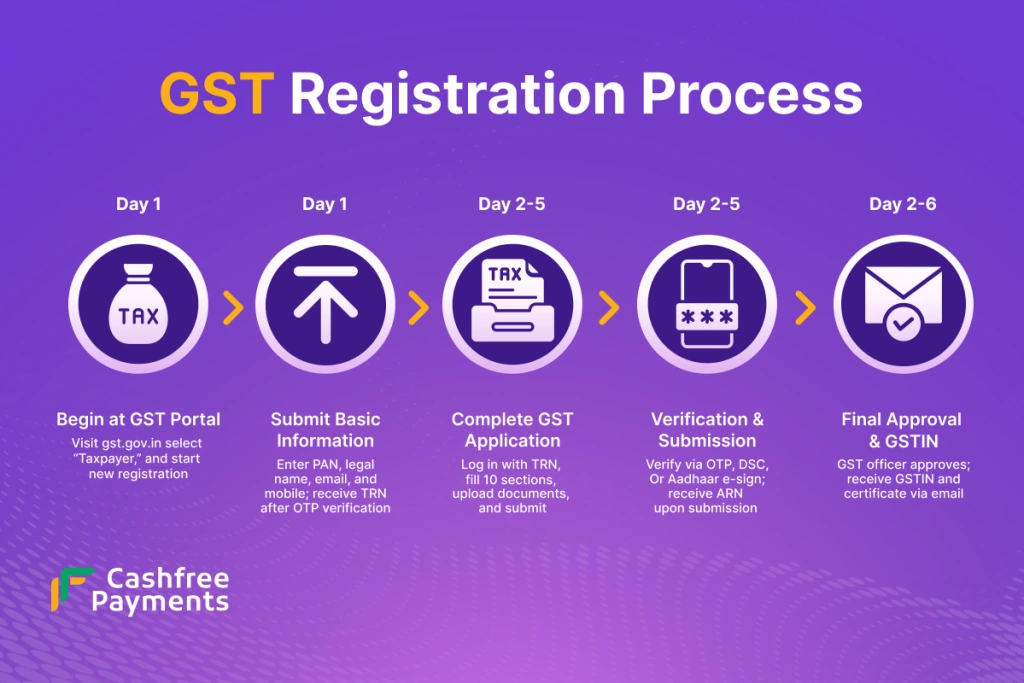
How Long Does GST Registration Take?
Providing correct information during the first application can prevent unnecessary delays.
What Is the GST Registration Fee?
The government does not charge a fee for submitting a GST registration application through the official portal.
However, a tax consultant, chartered accountant, or professional service provider may charge a separate service fee for preparing and submitting the application.
Be careful with unofficial websites that ask for compulsory GST registration charges.
What Happens After GST Registration?
After receiving a GSTIN, the taxpayer must continue following GST compliance rules.
Common responsibilities include:
The exact return filing requirement depends on the taxpayer type and filing scheme.
Common GST Registration Mistakes
The legal business name should match the PAN database. A trade name can be entered separately.
The address entered in the application should match the supporting documents.
Include the correct:
Shop or unit number
Floor
Building name
Street
District
State
PIN code
For rented premises, the applicant may need a rent agreement along with ownership proof from the property owner.
Select activities that properly describe the business, such as:
Retail
Wholesale
Manufacturing
Warehouse
Office
Service provider
Use an active mobile number and email address because OTPs, notices, and updates are sent to them.
GST registration is connected to the state from which the business makes taxable supplies. Select the state carefully.
GST Registration vs Composition Scheme
GST registration and the composition scheme are not the same.
GST registration provides a GSTIN and makes a person a registered taxpayer.
The composition scheme is a simplified tax option available to certain eligible small businesses. It has separate rules related to:
A business should review the conditions carefully before choosing the composition scheme.
Is GST Registration Permanent?
Regular GST registration does not normally require yearly renewal.
It remains valid until it is:
Temporary registrations for casual taxable persons and non-resident taxable persons may be issued for a limited period.
A business may apply for cancellation when:
Final GST returns and pending tax responsibilities may still need to be completed after cancellation.
Frequently Asked Questions
Final Words
GST registration gives a business an official identity under India’s Goods and Services Tax system.
Before applying, calculate your total PAN-based turnover, check the limit applicable to your state, and confirm whether compulsory registration rules apply to your business.Keep your PAN, address proof, business documents, email address, mobile number, and authorised signatory details ready. Accurate information and clear documents can make the approval process easier.After receiving the GSTIN, file returns on time, maintain proper records, and keep registration details updated.