Who Needs GST Registration in India? Complete Guide
GST registration is not required for every small business in India. Whether you need it depends on your annual turnover, type of business, location, sales method, and the customers you serve. Most businesses need to register after crossing the applicable turnover limit. However, some people must register even when their turnover is low. At the same time, certain small online sellers, service providers, farmers, and businesses dealing only in exempt supplies may not need registration. Understanding these rules can also make a GST Number Search more useful when verifying the registration status of a business.
This guide explains who needs GST registration in India, how the turnover limits work, and which exceptions you should check before applying. It also helps you understand how a GST Number Search can be used after registration to verify GST details.
Who Must Register for GST?
You generally need GST registration when:
Your aggregate turnover crosses the limit applicable to your business.
You make certain interstate taxable supplies.
You are responsible for paying GST under the reverse-charge mechanism.
You operate as a casual or non-resident taxable person.
You work as an agent supplying taxable goods or services for another taxable person.
You are an Input Service Distributor.
You are required to deduct TDS or collect TCS under GST.
You fall under another compulsory-registration category.
The main registration rules are covered under Sections 22, 23, and 24 of the Central Goods and Services Tax Act.
GST Registration Turnover Limit in India
The normal registration limit depends on whether you supply goods, services, or both.
Turnover Limit for Goods Suppliers
A business dealing exclusively in goods can normally remain unregistered until its aggregate turnover exceeds ₹40 lakh in a financial year.
However, the lower ₹20 lakh limit applies to goods suppliers making intra-state supplies in:
The ₹40 lakh benefit is not available to businesses covered by compulsory registration. It is also unavailable to suppliers of certain notified goods, including ice cream, pan masala, tobacco, and manufactured tobacco substitutes.
Turnover Limit for Service Providers
The normal GST registration limit for service providers is ₹20 lakh in a financial year.
A lower limit of ₹10 lakh applies in:
This rule may apply to consultants, freelancers, agencies, repair businesses, software professionals, designers, coaches, contractors, and other service providers.
What About Businesses Selling Goods and Services?
The higher ₹40 lakh limit is mainly available to businesses engaged exclusively in supplying goods.
A business supplying both goods and services will generally use the ₹20 lakh service or mixed-supply threshold, or ₹10 lakh in the four specified states.
For example, a shop that sells computers and also charges customers for repairs should not automatically assume that the ₹40 lakh goods limit applies.
What Is Aggregate Turnover Under GST?
A common mistake is to count only taxable local sales. GST uses aggregate turnover, which is calculated on an all-India basis for all businesses operating under the same PAN.
Aggregate turnover generally includes:
It excludes GST and compensation cess charged on invoices. It also excludes inward supplies on which the recipient pays tax under the reverse-charge mechanism.
Simple Aggregate Turnover Example
Suppose a business has:
Its aggregate turnover is ₹43 lakh, even though taxable domestic sales are only ₹25 lakh.
The owner should therefore check whether the applicable GST registration limit has been crossed.
Cases Where GST Registration Is Compulsory
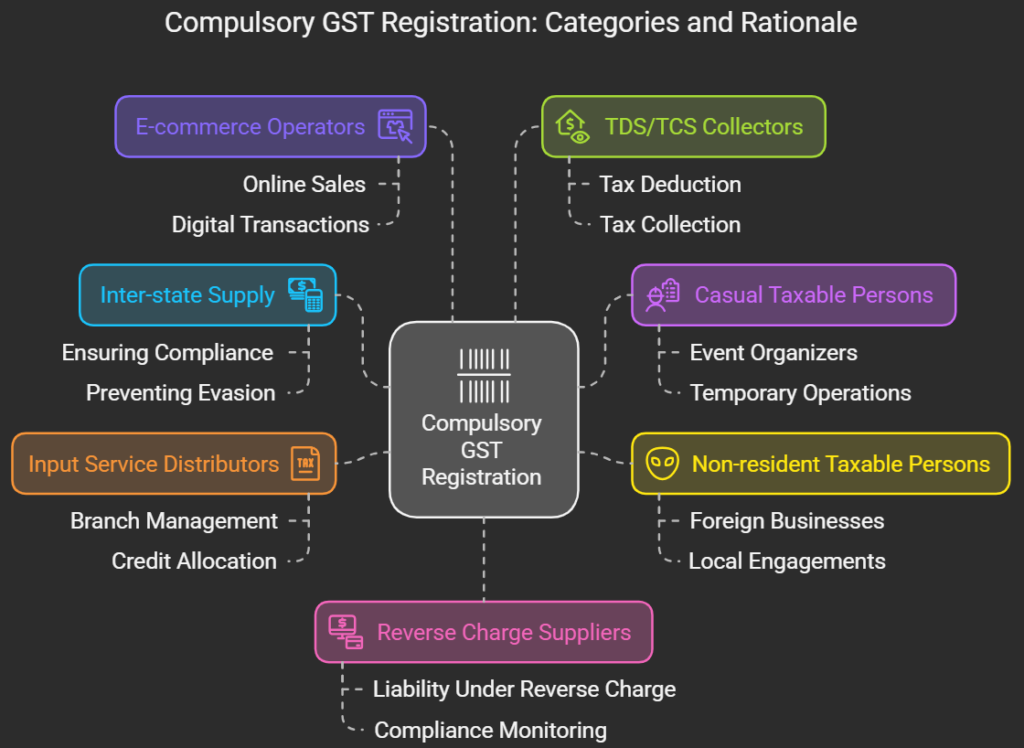
Some businesses need GST registration regardless of the normal turnover threshold.
Interstate Suppliers
A person making interstate taxable supplies of goods will generally need GST registration even when turnover is below the normal limit.
However, small interstate service providers can use the normal turnover exemption where the relevant exemption applies. This means that a freelancer serving a client in another state does not automatically need registration only because the client is located outside the freelancer’s state.
Interstate goods sellers should be more careful because the service-provider exemption does not generally apply to them. Specific exceptions may exist for notified persons and eligible e-commerce sellers.
Casual Taxable Persons
A casual taxable person occasionally supplies taxable goods or services in a state where they do not have a fixed place of business.
For example, a business participating temporarily in an exhibition or trade event in another state may be treated as a casual taxable person. Such persons generally require registration before starting the taxable activity.
Non-Resident Taxable Persons
A person living or established outside India who occasionally makes taxable supplies in India may need registration as a non-resident taxable person.
A non-resident applicant usually needs to appoint an authorised signatory who is resident in India.Wholesalers
People Liable to Pay GST Under Reverse Charge
Under the reverse-charge mechanism, the recipient pays GST instead of the supplier.
A person required to pay GST under reverse charge generally needs compulsory registration, even when turnover is below the standard threshold. However, this depends on whether the transaction is covered by a notified reverse-charge category.
Agents Supplying on Behalf of Another Person
An agent who makes taxable supplies on behalf of a principal may need compulsory registration.
The exact position can depend on how invoices are issued and whether the agent is making the supply in their own name. A person earning a simple referral fee is not automatically treated in the same way as an agent issuing invoices for the principal.
Input Service Distributors
GST TDS and TCS Entities
Government departments, specified organisations, and other notified persons required to deduct TDS under GST need the appropriate registration.
An e-commerce operator required to collect tax at source under GST must also register, regardless of its turnover.
Foreign Digital Service Providers
Do Online Sellers Need GST Registration?
The old general understanding was that anyone selling goods through an e-commerce operator had to obtain GST registration, regardless of turnover.
That is no longer true in every case.
Eligible sellers supplying goods through an e-commerce operator can remain unregistered when their turnover is below the applicable registration limit and they meet all prescribed conditions.
The seller must:
Therefore, a small seller operating through an online marketplace may not need a GSTIN, but only when every condition is satisfied.
Small service providers supplying services through e-commerce platforms may also use the normal turnover exemption in eligible cases. However, different rules may apply to services where the e-commerce operator itself is responsible for paying GST.
Do Freelancers Need GST Registration?
A freelancer is normally treated as a service provider.
A freelancer usually needs registration when aggregate turnover exceeds:
Some freelancers register voluntarily before reaching the limit because their business clients want tax invoices or because they want to claim eligible input tax credit.
Voluntary registration also creates regular return-filing and record-keeping duties.
Who Does Not Need GST Registration?
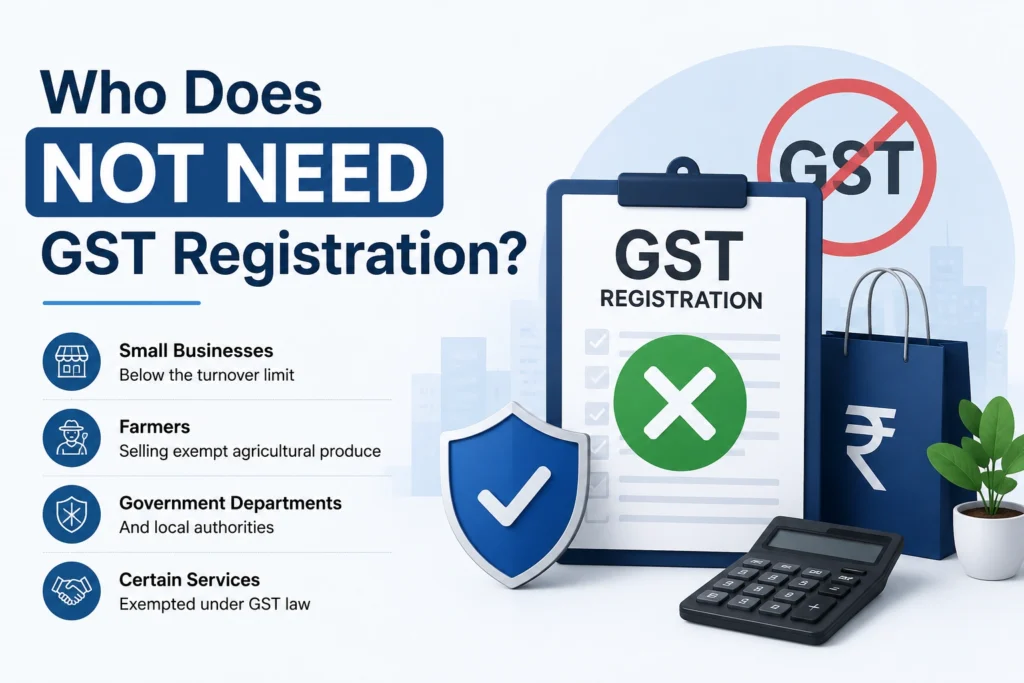
GST registration is generally not required in the following situations.
Businesses Below the Applicable Limit
A small business below the relevant turnover threshold may remain unregistered when no compulsory-registration rule applies.
Businesses Making Only Exempt Supplies
A person dealing exclusively in goods or services that are wholly exempt or not liable to GST does not normally need registration.
However, if the same business starts making taxable supplies, its full aggregate turnover may need to be reviewed.
Agriculturists Selling Their Own Produce
An agriculturist does not need GST registration to the extent they supply produce grown through the cultivation of their own land.
This exemption should not automatically be applied to a separate trading, processing, manufacturing, or resale business operated by the same person.
Eligible Small E-Commerce Sellers
Small sellers supplying goods through an e-commerce operator may remain unregistered under the special enrolment system when they meet all required conditions.
Can You Register for GST Voluntarily?
A person who is not legally required to register may apply voluntarily.
Voluntary GST registration can be useful when:
Once registered, you must follow the rules that apply to registered taxpayers. This may include issuing proper invoices, maintaining records, filing returns, and paying tax on time.
Voluntary registration should therefore be a business decision, not simply a formality.
When Should You Apply for GST Registration?
A person who becomes liable for GST registration should normally apply within 30 days from the date the liability begins.
Registration is state-based. If a business becomes liable in more than one state, it may need a separate GST registration in each relevant state or Union Territory.
Do not wait until the financial year ends. Liability can begin on the day your turnover crosses the limit or when a compulsory-registration condition starts applying.
How to Apply for GST Registration
GST registration is completed online through the official GST Portal.
The basic process is:
Open the GST Portal.
Select Services, followed by Registration and New Registration.
Enter your state, legal business name, PAN, email address, and mobile number.
Verify the email and mobile number through OTP.
Complete Part B of the application.
Upload the required documents.
Complete Aadhaar authentication or the applicable verification process.
Submit the application and keep the Application Reference Number.
PAN is mandatory for a normal GST registration application.
Documents Commonly Required
The documents depend on the business structure, but commonly include:
The exact document list may differ for proprietorships, partnerships, companies, trusts, and other organisations.
Common GST Registration Mistakes
One frequent mistake is checking only the turnover of one shop or branch. The threshold is based on aggregate turnover under the same PAN across India.
Another mistake is using the ₹40 lakh goods limit when the business also provides services. Mixed businesses will generally need to check the lower service threshold.
Online sellers may also make errors in both directions. Some assume that every marketplace seller needs a GSTIN, while others ignore the conditions attached to the e-commerce exemption.
Finally, businesses sometimes wait until the end of the year to register. Turnover should be monitored throughout the year so that an application can be made as soon as liability arises.
Important Links
Frequently Asked Questions
Final Words
The answer to who needs GST registration in India depends on more than annual sales.
You must check the nature of your supplies, aggregate turnover under the same PAN, business location, interstate transactions, e-commerce activity, and compulsory-registration rules.
For many businesses, the main limits are ₹40 lakh for eligible goods suppliers and ₹20 lakh for service or mixed suppliers. Lower limits apply in specified states.
Some people need registration below these limits, while others qualify for an exemption.
Check your turnover every month and review the rules before starting interstate sales, joining an online marketplace, or expanding into another state.
When your situation includes mixed supplies, reverse charge, exports, multiple branches, or online selling, professional advice can help prevent costly compliance mistakes.