GST Registration Eligibility, Threshold Limit & Exemptions
GST registration is generally required when your yearly aggregate turnover crosses the limit set for your business type and state. In most states, the limit is ₹40 lakh for businesses dealing only in goods and ₹20 lakh for service providers or businesses supplying both goods and services. If you’re unsure about a business’s registration status, you can use a GST number Search tool to verify GST details online.
However, turnover is not the only test. Some people must register even when their sales are below the normal limit. Others may get an exemption even when they sell through an online marketplace or provide services to customers in another state.
What Is GST Registration Eligibility?
GGST Registration Eligibility tells you whether you are required or allowed to register under the Goods and Services Tax system.
Your GST Registration Eligibility mainly depends on:
Your legal structure does not usually decide the turnover limit. A sole proprietor, partnership, LLP, company, trust, or other business may need GST registration when the relevant GST Registration Eligibility conditions are met.
GST Registration Threshold Limit in India
The GST Registration Eligibility limit is not the same for every business. Suppliers dealing only in goods may receive a higher turnover limit, while service providers and mixed businesses normally follow a lower limit.
| Type of business | State or Union Territory | Registration limit |
|---|---|---|
| Only goods | Most states and UTs, including Assam and Himachal Pradesh | ₹40 lakh |
| Only goods | Arunachal Pradesh, Meghalaya, Sikkim, Uttarakhand, Puducherry and Telangana | ₹20 lakh |
| Only goods | Manipur, Mizoram, Nagaland and Tripura | ₹10 lakh |
| Services or both goods and services | Most states and UTs | ₹20 lakh |
| Services or both goods and services | Manipur, Mizoram, Nagaland and Tripura | ₹10 lakh |
These limits apply to aggregate turnover during a financial year. Liability normally begins when your turnover exceeds the applicable limit.
Is the GST limit ₹20 lakh or ₹40 lakh?
Both limits can be correct.
The ₹40 lakh limit generally applies when you supply only goods and operate from a state that has adopted the higher limit. The ₹20 lakh limit generally applies to service providers, mixed suppliers and goods businesses in certain states.
If you sell goods and also provide taxable services, you normally cannot use the ₹40 lakh goods-only limit. Your applicable limit may fall to ₹20 lakh or ₹10 lakh, depending on your state.
Businesses That Cannot Use the ₹40 Lakh Limit
The higher ₹40 lakh exemption is not available to every goods supplier.
It may not apply when you supply notified products such as:
It also does not protect a person who falls under a compulsory-registration category. The normal limit for that person will depend on the state, product and type of supply.
What Is Aggregate Turnover Under GST?
Aggregate turnover means the total value of supplies connected with the same PAN across India. It is based on sales and receipts, not your profit after expenses.
Aggregate turnover generally includes:
It normally excludes:
For example, suppose a freelancer earns ₹12 lakh from Indian clients and ₹9 lakh from foreign clients. The total aggregate turnover is ₹21 lakh because export income is also counted. The freelancer may therefore cross the normal service-provider threshold even though domestic income alone is below ₹20 lakh.
Is the GST threshold based on profit or sales?
The GST Registration Eligibility threshold is based on aggregate turnover, not profit.
A shop may have ₹45 lakh in sales but only ₹5 lakh in profit. GST Registration Eligibility is checked using the ₹45 lakh turnover figure, subject to the state, product, and other applicable rules.
Who Must Register for GST Regardless of Turnover?
Section 24 of the CGST Act lists cases where registration may be compulsory even when turnover is below the normal threshold.
Common cases include:
Interstate suppliers of taxable goods
A business making taxable interstate supplies of goods generally needs GST registration regardless of turnover. Special relief is available for certain handicraft suppliers and notified categories.
Small service providers are treated differently. A person making interstate taxable service supplies can generally use the normal ₹20 lakh or ₹10 lakh threshold exemption.
Casual taxable persons
A casual taxable person occasionally supplies goods or services in a state where they do not have a fixed place of business.
For example, a business from Pune setting up a temporary taxable stall at an exhibition in Delhi may need casual taxable person registration. This registration is generally required before the business activity starts, although limited exemptions exist for certain handicraft suppliers.
Persons liable under reverse charge
A person required to pay GST under the reverse charge mechanism may need registration even when normal turnover limits have not been crossed.
This can apply to recipients of notified legal, transport, security, government or other specified supplies. The exact treatment depends on the supply and the applicable notification.
Non-resident taxable persons
A non-resident who occasionally makes taxable supplies in India may need GST registration without receiving the normal threshold exemption.
Agents supplying on behalf of another taxable person
An agent, broker or commission agent who makes taxable supplies on behalf of another taxable person may be covered by compulsory-registration rules.
Input Service Distributors
An Input Service Distributor needs a separate GST Registration Eligibility assessment for distributing eligible input tax credit to business units. The normal turnover limit does not apply to ISD registration.
TDS deductors and e-commerce operators
Persons required to deduct GST TDS and e-commerce operators required to collect tax at source must register under the relevant provisions.
Certain overseas suppliers of online database services or online money gaming to people in India may also need registration.
Who Is Exempt From GST Registration?
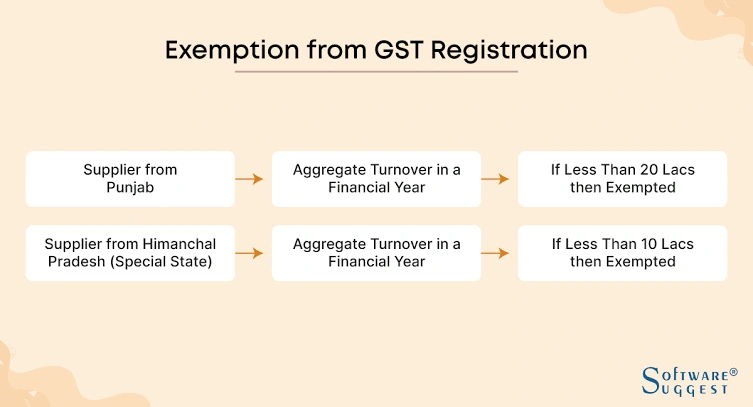
Being below the turnover limit is the most common exemption, but it is not the only one.
People supplying only exempt or non-taxable goods or services
A person dealing exclusively in goods or services that are wholly exempt or not liable to GST is generally not required to register.
However, if the person also starts making taxable supplies, total aggregate turnover may become important. Exempt turnover can be counted when taxable and exempt activities are carried on together.
Agriculturists
An agriculturist is generally not required to register for the supply of produce grown through cultivation of their own land.
This exemption is limited to agricultural produce from cultivation. Other taxable trading or business activities may be tested separately.
Suppliers whose tax is fully payable by the recipient
A person making only notified supplies on which the recipient pays the full GST under reverse charge may be exempt from registration.
A current exception applies to certain suppliers of metal scrap falling under Chapters 72 to 81. These suppliers should check the rules introduced through Notification No. 24/2024-Central Tax.
Small interstate service providers
A service provider making interstate taxable supplies can generally remain unregistered while aggregate turnover stays within ₹20 lakh, or ₹10 lakh in Manipur, Mizoram, Nagaland and Tripura.
Small service providers using e-commerce platforms
ervice providers using an e-commerce operator may use the normal threshold exemption when:
Their turnover remains below the applicable limit
Their service is not one of the notified services covered by Section 9(5)
Other conditions of the notification are met
This means every freelancer or small service provider using an online platform does not automatically need GST registration.
Do Online Sellers Need GST Registration?
Earlier, sellers supplying goods through e-commerce operators were generally required to register regardless of turnover. Relief introduced from 1 October 2023 allows some unregistered goods sellers to make supplies through eligible e-commerce platforms.
The seller generally must:
Interstate sales through the platform are not covered by this relief.
Can You Register Voluntarily Below the Threshold?
Yes. A business below the compulsory threshold may apply for voluntary GST registration.
Voluntary registration may help when:
However, voluntary registration also brings regular responsibilities. You may need to issue GST-compliant invoices, maintain records, file returns and pay tax on taxable supplies. Do not register only because someone says every business needs a GST number.
When Should You Apply for GST Registration?
A person who becomes liable under GST Registration Eligibility should normally apply for GST registration within 30 days from the date the liability begins.
Casual taxable persons and non-resident taxable persons generally need to apply before starting taxable business activity. Different advance-deposit and validity rules may apply to them.
What Happens If You Do Not Register?
A business that was legally required to register may have to pay unpaid GST, interest and penalties. The tax department may also start registration proceedings.
Failure to obtain registration can attract a penalty of ₹10,000 or an amount linked to the tax involved or evaded, whichever is higher, depending on the facts and provision applied.
Quick GST Registration Check
Ask these questions before deciding:
Do you supply goods, services or both?
What is your total PAN-based turnover across India?
Do you make any taxable interstate supplies?
Do you sell through an e-commerce operator?
Are any of your supplies covered by reverse charge?
Do you sell only exempt or non-taxable supplies?
Is your product excluded from the ₹40 lakh goods limit?
Do compulsory-registration rules apply to your business?
A “yes” to a compulsory-registration question can matter more than being below the normal turnover limit.
Important Links
Frequently Asked Questions
Final Words
The ₹40 lakh, ₹20 lakh, and ₹10 lakh limits are only starting points for determining GST Registration Eligibility. Your state, product, business model, online selling activity, and type of transaction can all affect whether you need to register under GST.
Keep a monthly record of your total PAN-based turnover. Check the rule before starting interstate goods sales, selling through a marketplace, or accepting a supply covered by reverse charge. For a case involving several businesses, exempt income, or more than one state, get advice from a GST professional before relying on a threshold exemption.