GST State Code List 2026 for All States & Union Territories
A GST state code is a two-digit number used to identify the Indian state or Union Territory where a taxpayer is registered under the Goods and Services Tax system. The GST State Code List 2026 helps businesses, accountants, and taxpayers identify the correct state code for GST-related transactions.You can find this code in the first two digits of a GSTIN. For example, a GST number Search beginning with 27 belongs to Maharashtra, while a GSTIN beginning with 29 belongs to Karnataka.GST state codes are used in GST registration, tax invoices, GST returns, e-invoices, and e-way bills. Entering an incorrect code can cause validation errors, tax calculation problems, or mismatches between the GSTIN and the registered address.
The table below provides the complete GST State Code List 2026 for all Indian states and Union Territories.
What Is a GST State Code?
A GST state code is a unique two-digit number assigned to each state and Union Territory under GST.
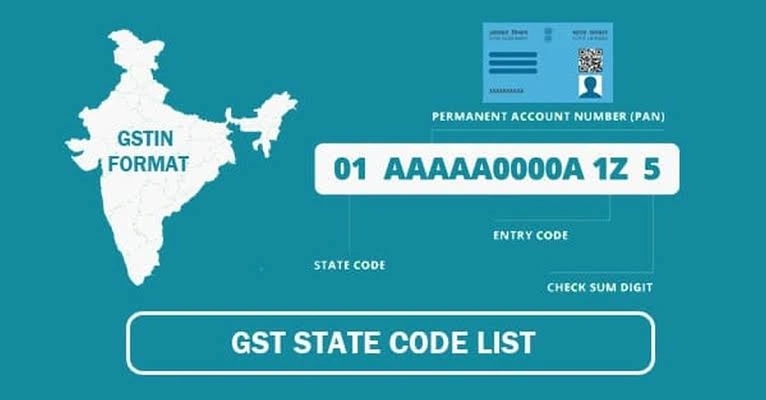
It helps the GST system identify the state in which a taxpayer is registered. The code forms the first two characters of the 15-character GST Identification Number, commonly called GSTIN.
For example:
27ABCDE1234F1Z5
In this GSTIN:
The e-invoice system checks whether the state code entered in supplier or recipient details matches the first two digits of the GSTIN. A mismatch may result in rejection of the invoice data.
Complete GST State Code List
| GST Code | State or Union Territory | Type |
|---|---|---|
| 01 | Jammu and Kashmir | Union Territory |
| 02 | Himachal Pradesh | State |
| 03 | Punjab | State |
| 04 | Chandigarh | Union Territory |
| 05 | Uttarakhand | State |
| 06 | Haryana | State |
| 07 | Delhi | Union Territory |
| 08 | Rajasthan | State |
| 09 | Uttar Pradesh | State |
| 10 | Bihar | State |
| 11 | Sikkim | State |
| 12 | Arunachal Pradesh | State |
| 13 | Nagaland | State |
| 14 | Manipur | State |
| 15 | Mizoram | State |
| 16 | Tripura | State |
| 17 | Meghalaya | State |
| 18 | Assam | State |
| 19 | West Bengal | State |
| 20 | Jharkhand | State |
| 21 | Odisha | State |
| 22 | Chhattisgarh | State |
| 23 | Madhya Pradesh | State |
| 24 | Gujarat | State |
| 26 | Dadra and Nagar Haveli and Daman and Diu | Union Territory |
| 27 | Maharashtra | State |
| 29 | Karnataka | State |
| 30 | Goa | State |
| 31 | Lakshadweep | Union Territory |
| 32 | Kerala | State |
| 33 | Tamil Nadu | State |
| 34 | Puducherry | Union Territory |
| 35 | Andaman and Nicobar Islands | Union Territory |
| 36 | Telangana | State |
| 37 | Andhra Pradesh | State |
| 38 | Ladakh | Union Territory |
The numbers do not run continuously because certain numbers are not included in the current active master list. Always use the code shown against the state or Union Territory rather than guessing a missing number. The official e-invoice master-code directory includes the current state and territory codes.
Important Formatting Tip
Codes from 01 to 09 must always be written with the starting zero.
For example:
Leaving out the zero may cause formatting or validation problems in GST software.
How to Find the State Code in a GST Number
You can find the state code by checking the first two digits of the GSTIN with the help of the GST State Code List 2026.
Suppose a business has the following GST number:
24ABCDE1234F1Z8
The first two digits are 24, which means the business is registered in Gujarat.
09ABCDE1234F1Z3
The first two digits are 09, so the taxpayer is registered in Uttar Pradesh.
You do not need to examine the complete GSTIN when you only want to identify the registered state. The first two digits are enough, and the GST State Code List 2026 makes it easy to match them with the correct state or Union Territory.
However, this does not confirm whether the registration is active. For that, you should verify the complete GSTIN through the GST portal.
How to Verify a GST State Code Online
Checking the first two digits tells you the state connected with a GSTIN, but it does not prove that the GST registration is genuine or active.
To verify a GSTIN:
Check the following information carefully:
Quick tip: Before creating the first invoice, verify a new customer’s or supplier’s GSTIN and confirm the state using the GST State Code List 2026. Do not rely only on an old invoice, visiting card, screenshot, or WhatsApp message.
GST State Code vs PIN Code
A GST state code and a postal PIN code are different. Confusing them can lead to incorrect address or invoice details.
A GST state code:
For example, the GST state code for Maharashtra is 27.
A postal PIN code:
For example, 400001 is a postal PIN code used for a location in Mumbai.
Why Is the GST State Code Important?
GSTIN Format
The GST state code is used in several parts of GST compliance.
GST Registration
The code identifies the state or Union Territory in which the taxpayer is registered.
A business operating from multiple states may require separate GST registrations for those states, depending on its business structure and applicable GST rules.
For example, a business registered in both Maharashtra and Karnataka may have separate GSTINs beginning with 27 and 29.
Preparing GST Invoices
A GST invoice must contain accurate details of the supplier and recipient, including their GSTINs where applicable.
GST invoice rules also require state and state-code information in relevant cases, including certain invoices for unregistered recipients and inter-state supplies.
Before issuing an invoice, check:
Supplier GSTIN
Recipient GSTIN
State code
Billing address
Delivery address
Place of supply
Type of GST charged
Filing GST Returns
GSTIN and state details are used when reporting sales invoices in returns such as GSTR-1.
An incorrect GSTIN may cause:
Invoice validation errors
Input tax credit mismatches
Incorrect reporting
Difficulty for the buyer in viewing the invoice
Delays in return filing
Verify customer details before filing rather than copying information from outdated records.
Generating E-Invoices
The supplier and recipient state codes entered in an e-invoice must match their GSTIN details.
The e-invoice system can reject an invoice when:
The supplier state code does not match the supplier GSTIN.
The recipient state code does not match the recipient GSTIN.
An invalid place-of-supply code is entered.
The wrong tax type is applied.
The PIN code does not belong to the selected state.
Official e-invoice validation rules require the first two GSTIN digits to match the relevant supplier or recipient state code.
Creating E-Way Bills
GST state codes are also used when entering origin, destination, billing and shipping details in an e-way bill.
Check the following before generating an e-way bill:
Dispatch state
Delivery state
Supplier GSTIN
Recipient GSTIN
Bill-to address
Ship-to address
PIN codes
This is especially important when the billing location and delivery location are different.
GST State Code and Place of Supply Are Not Always the Same
The GST state code and place of supply are related, but they do not mean exactly the same thing.
A GST state code identifies the state or Union Territory where a taxpayer is registered.
The place of supply identifies the location where a supply is treated as taking place under GST rules.
In a simple local transaction, the registered state and place of supply may be the same. However, they may differ in transactions involving:
The GST portal uses the selected place-of-supply state code to determine the supply type in the relevant GSTR-1 sections. Referring to the GST State Code List 2026 can help ensure the correct state code is selected.
Do not select the place of supply simply by copying the buyer’s GSTIN state code. Always check the applicable place-of-supply rules for the transaction before filing GST returns.
How GST State Codes Affect CGST, SGST and IGST
GSTIN Format
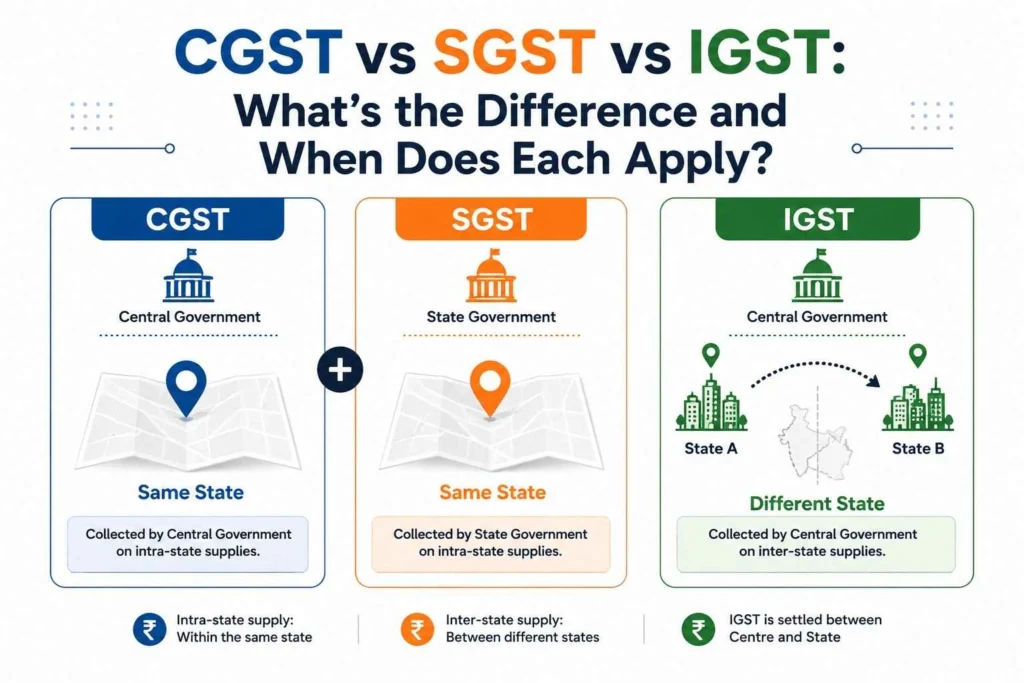
In a normal transaction, the supplier’s location is compared with the place of supply.
Intra-State Supply
When the supplier’s state and place of supply are the same, the transaction is generally treated as an intra-state supply.
In such cases, the invoice normally includes:
Central GST, or CGST
State GST, or SGST
For a Union Territory, UTGST may apply instead of SGST, subject to the applicable rules.
Inter-State Supply
When the supplier’s state and place of supply are different, the transaction is generally treated as an inter-state supply.
In such cases, IGST normally applies. The GST State Code List 2026 helps identify the supplier’s registered state, making it easier to determine the correct tax treatment.
The e-invoice validation system checks the supplier state code and place-of-supply code when validating whether CGST, SGST, or IGST has been entered correctly.
Important: This is a general explanation. Special rules may apply to exports, SEZ transactions, services, bill-to and ship-to supplies, and other complex transactions.
Special GST Location Codes
In addition to normal state and Union Territory codes, GST systems may show special location codes.
Code 96 may be used as the place of supply for a foreign country in specified transactions.
The GST portal explains that transactions reported with place of supply code 96 are treated as inter-state supplies in the relevant circumstances.
Code 97 appears as “Other Territory” in the official e-invoice master-code directory. It is not the standard registration code of a regular Indian state or Union Territory.
Do not use special codes unless they match the transaction type and the instructions provided in the GST form or software.
Common GST State Code Mistakes
Removing the Starting Zero
Selecting the Wrong State
Confusing Registration State With Delivery State
Using an Inactive GSTIN
Assuming the Buyer’s Code Decides the Tax
Using an Outdated Code List
Confusing State Code With GST Jurisdiction
Practical Tips for Using GST State Codes
Verify every new customer’s GSTIN.
Use the GST State Code List 2026 to keep codes 01 to 09 in the correct two-digit format.
Match the first two GSTIN digits with the registered state.
Check whether the GSTIN is active.
Confirm billing and delivery addresses separately.
Determine the place of supply carefully.
Do not use the buyer’s state code alone to select the tax type.
Update GST codes in accounting and invoicing software using the latest GST State Code List 2026.
Recheck details before generating an e-invoice or e-way bill.
Consult a GST professional when the transaction involves complicated place-of-supply rules.
Important Links
Frequently Asked Questions
Final Words
The GST State Code List 2026 makes it easier to identify the state or Union Territory connected with a GST registration. Simply check the first two digits of the GSTIN to find the registered state.
However, finding the state code is only one part of preparing a correct GST invoice. You should also verify the GSTIN status, billing address, delivery address, PIN code, and place of supply.
A small mistake in a state code can cause invoice rejection, incorrect tax selection, or return-filing problems. Use the GST State Code List 2026 to verify the correct state code before submitting an e-invoice, e-way bill, or GST return, especially when the transaction involves different billing and delivery states.